Radio
The first radio broadcast in New Zealand was made on 17 November 1921 by radio pioneer Robert Jack. in 1925, the government granted the Radio Broadcasting Company the right to earn substantial income from radio dealers' licences on the condition that the company expand four existing stations in the main centres to establish a national non-commercial broadcasting system, the direct forerunner of today's National Radio. This did not happen so the government ended the license and established the New Zealand Broadcasting Board which under various names built the non-commercial network and established commercial (paid for by advertising) radio stations in every region of NZ. They had inspiring names like 1ZM, 1YA, 2YB and 3ZB. After various permutations, the Bolger government in 1995 sold the commercial stations to become what we now of as the Newstalk ZB network and the ZM network became ‘The Hits’, all owned by NZME. What remained was called Radio New Zealand, Radio NZ, and RNZ.
The History of Public Media in NZ
Whatever happened to NZ television?
Experiments in television were initiated in the 1950s but it was only in the 1960s that regular television services commenced in New Zealand.
The NZBS was established as a state monopoly, with Reithian principles like the BBC to inform, educate and entertain. Funding was through the licence fee however, almost from the beginning, advertising was permitted too. Given the absence of competition, there was not much need to get ratings in the early days so being funded by advertising did not impact the content much – there were many documentaries, current affairs, children’s programmes, wildlife documentaries, and even programmes about local artists and art!
Before we get too misty-eyed about the old days though, there was also very little diversity, prime-time Māori programming stopped at Billy T James, and our newsreaders all had polished English accents.
In the 1970s, more publicly-owned channels were added and in the 1980s the BCNZ was split up under Rogernomics:
The drama department was sold and became South Pacific Pictures Ltd.
The commissioning department became NZ On Air.
RNZ was carved off leaving TVNZ as the broadcaster of TV1 and Two.
NZ’s first privately-owned TV station began – TV3.
This significant restructuring began the demise of New Zealand television. Even though many local programmes were funded through NZ On Air, the range of content slowly decreased. Privately-owned TV3 was desperately focused on staying afloat, and TVNZ was required by the government to make a profit, so that expensive or lower-rating programmes were cancelled. Cheap genres like game shows and reality-TV predominated while news and current affairs became markedly ‘softer’ and easier to understand.
NZ On Air
Up until 1989, TVNZ was the direct recipient of the licence fee, giving it the autonomy to decide what programmes to commission and when to schedule them.
The establishment of NZ On Air was therefore a radical idea, which has not been replicated anywhere else in the world. Government money funds programmes on any broadcaster, public or private. The idea was that the best ideas would get funded and if a good proposal was turned down by one broadcaster then another one would be interested. This market for TV ideas sounded good but in reality, the channels still controlled what they screened, so the shows that got ratings were the ones that got produced.
The same problem occurs with the advent of online media. NZ On Air can fund content for minority audiences that would otherwise not get made, but they can’t force the big websites like YouTube, Facebook, NZHerald or Stuff to put them on their home page.
The TVNZ Charter
By the late 1990s, TVNZ was being prepared by the Bolger/Shipley government to be sold. However, the incoming Clark government recognised that the deregulation, privatisation and commercialisation of the 1990s had led to an erosion of public benefits. Trying to avoid spending money on the problem, The Clark government introduced the TVNZ Charter that required TVNZ to maintain public service benefits for viewers while making a profit as well. The dual mandate proved difficult to manage and impossible to enforce.
There are other public broadcasters around the world that generate revenue from advertising, such as RTE in Ireland but the difference is that it receives at least 50% funding from the Irish government, whereas TVNZ receives nothing and in fact is required to pay the government annual dividends.
TVNZ 6 and TVNZ 7
TVNZ 6 and TVNZ 7 began as part of TVNZ’s initiative to help drive digital switch-over. Not only were they the first digital free-to-air channels in NZ, TVNZ 6 and 7 were also our first commercial-free television channels. As such they were not constrained by the commercial pressures which limited TV One and TV2 so they embodied public service values far better than the charter arrangements.
Introduced in 2007 and 2008 respectively, TVNZ 6 and 7 were also subject to internal cabinet conflicts, with Treasury and the Minister of Finance being highly reluctant to fund the new initiative. Eventually they were funded from 2007 to 2012 from a $79m appropriation (effectively a drip-fed repayment of a special $70m dividend TVNZ had paid the government as part of a restructuring exercise).
TVNZ 6 screened children’s programmes and family-oriented content during the day with arts, comedy and drama content in the evening. Importantly, the daytime ‘Kidzone’ schedule provided a commercial-free environment for younger children with a high proportion of NZ content.
TVNZ 7 specialised in news, current affairs and documentary programmes. This included a full hour of news and analysis every evening with innovative programmes like Back Benches, Media 7 and The Court Report.
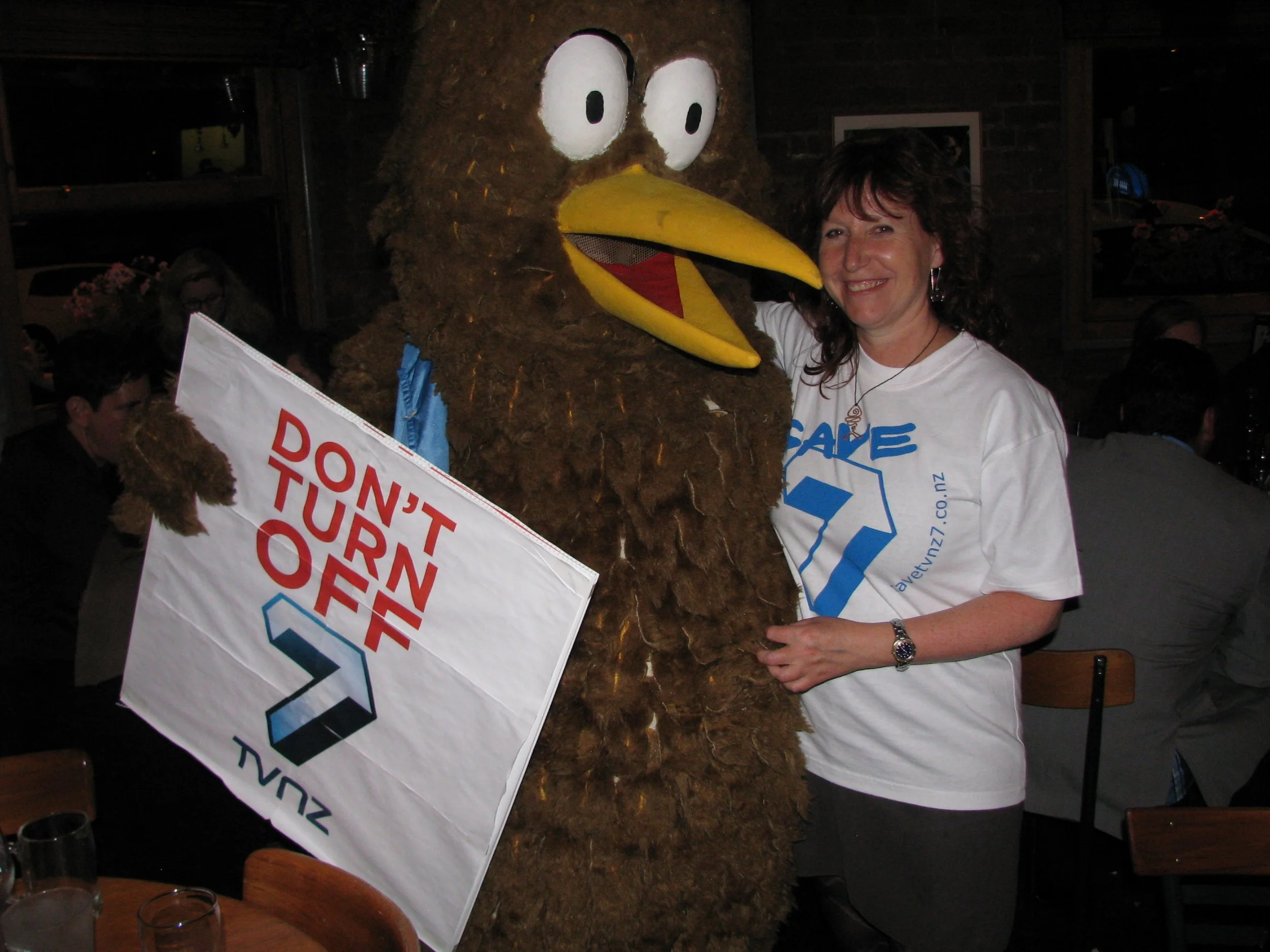
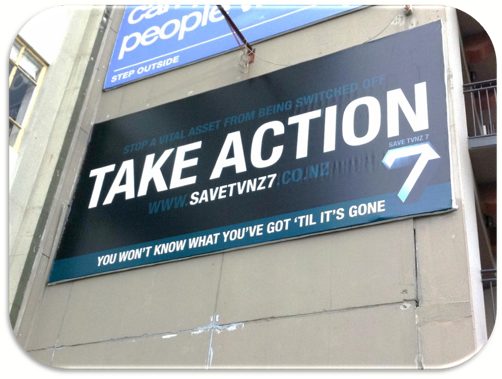
Although TVNZ 6 and 7 were delivering public-service benefits, audiences were small for the first few years as audiences took time to discover then and change entrenched viewing habits. The Key government in 2008 decided to discontinue funding and the Save TVNZ 7 campaign emerged, from which BPM evolved, gathering 36,000 signatures and holding two protest marches to try and save the channel.
Whakaata Māori
The Māori Television Service (MTS) has a long and complex history involving a long-running legal wrangle between the Waitangi Tribunal and the government ending in a Privy Council ruling which confirmed that the government had a legal obligation to protect te reo Māori as a taonga through the provision of broadcast services. The Māori Television channel was established in 2004.
Although the majority of its content on the main channel and te Reo channel is in reo Māori, there is also a wide range of international movies and documentaries which has broadened its appeal and led to the perception that MTS is really our national public service television broadcaster. MTS is a vital part of our public media system, but the wider needs of both mainstream NZ audiences and other minority audiences need their own provisions.
The Lost Generation
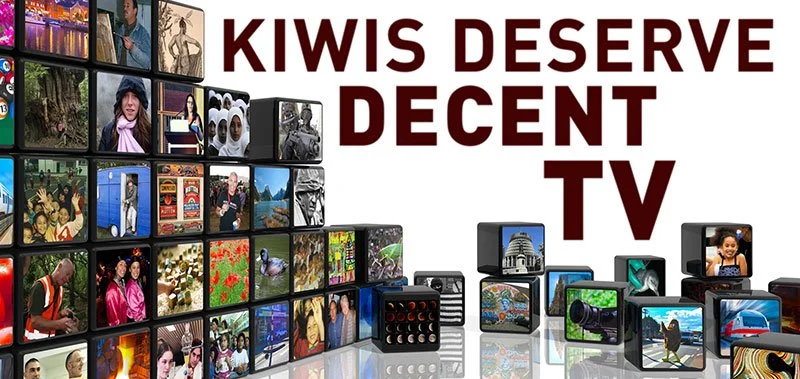
There’s now a generation of Kiwis who have grown up not knowing what public service television is. We only find out what we’re missing if we live overseas for a period of time long enough to watch local TV. It soon becomes apparent that TV could be a lot better in NZ, and that there are whole genres of content we are missing out on.
TV Genres Extinct in NZ
arts programmes
science programmes
programmes for people over 50
regional news
current affairs
natural history
kidult drama
educational television
political interviews in primetime
comedies